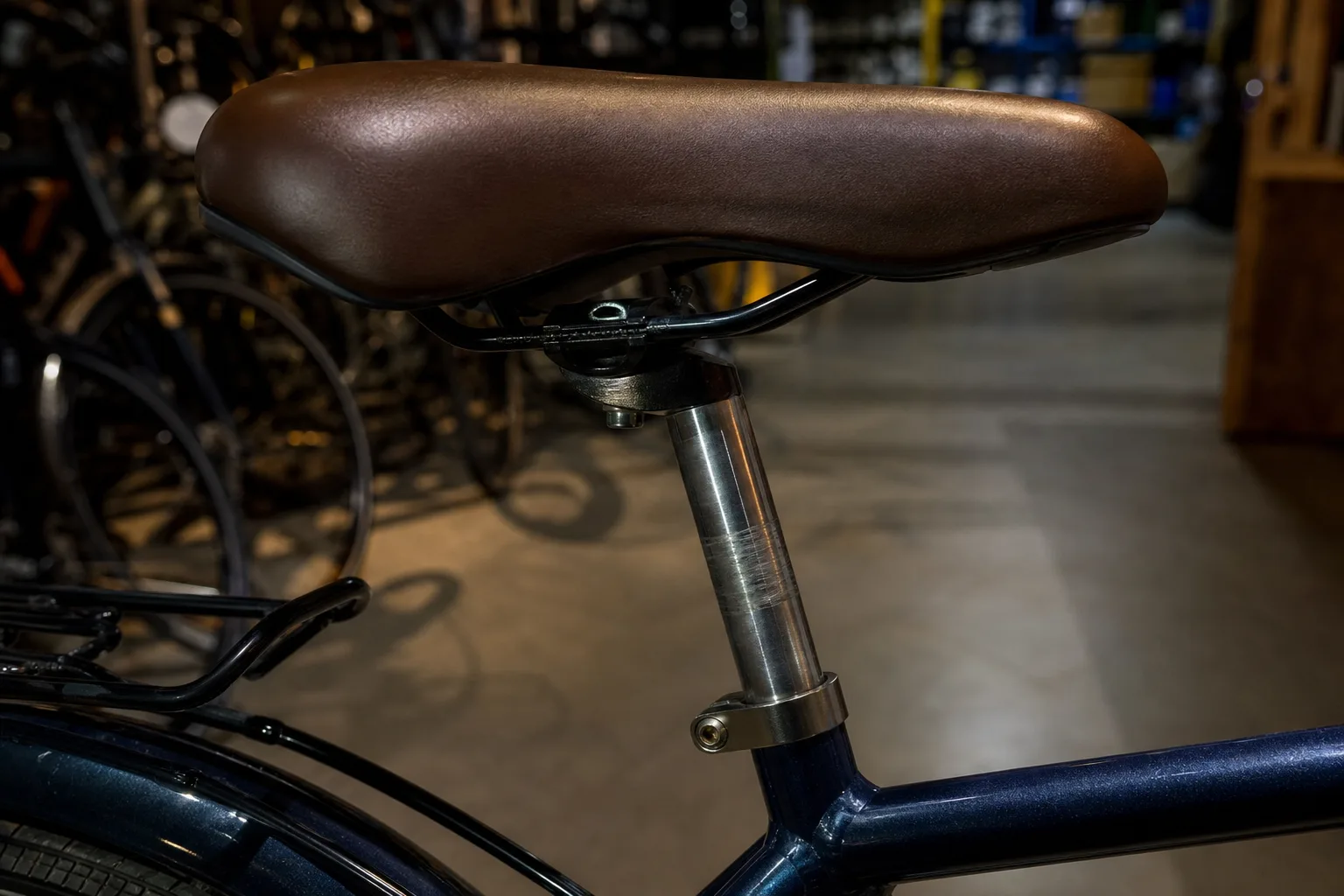
A rider brought in a step-through three-speed complaining that both knees ached after two miles, which is short enough that nobody expects to hurt. Nothing on the bike was broken. The saddle sat roughly two inches below where it belonged, lowered on purpose so that both feet could sit flat on the pavement at a stop, and every pedal stroke was being taken with the knee never straightening past a deep bend. That is the single most common fit problem on comfort bikes, and it is also the easiest one to reverse, provided the rider understands what they are trading away and what they get back.
The flat-foot saddle against the extended-leg saddle
Set the saddle so both feet plant flat while seated and the leg never opens up; the quadriceps do work the hip and hamstring should share, the kneecap tracks under load through its tightest range, and cadence drops because a short lever is a slow lever. Set it so the knee keeps a slight bend, roughly twenty-five to thirty-five degrees short of straight at the bottom of the stroke, and the same rider climbs a bridge ramp without standing. The cost of the second setup is that only the toes reach the ground when seated. That cost is real, and it is also almost entirely solved by how a rider stops rather than by how the seatpost is clamped.
A workable check needs no tools beyond a wall. Sit on the saddle with a hand steadying you, put the heel of one shoe on the pedal at its lowest point, and pedal backward slowly. If the hips rock side to side, the saddle is too high; if the heel stays planted with the knee still visibly bent, it is too low. Correct height puts the heel just barely reaching, so that the ball of the foot in normal riding position ends with that slight bend. Mark the post with tape before you move anything, so you can return to a known point.
Fore-aft is measured from the knee, not the rails
Riders often slide the saddle forward to shorten the reach to the bars, which is the wrong tool for that job and quietly changes how weight sits over the pedals. The reference most shops use is the front of the kneecap over the pedal spindle with the cranks horizontal, checked with a plumb line or a phone hung on a string. On an upright bike the torso is close to vertical, so a position slightly behind that line often feels better, since the seat is carrying more of the body than the hands are. Move the saddle in small steps, a quarter inch at a time, and ride the same route between changes. Reach gets fixed at the stem and the bar, not here.
Sweep, rise and reach as one decision
Handlebars for sitting up are usually described by sweep, the angle at which the grip ends turn back toward the rider. A modest sweep, somewhere in the twenty to thirty degree range, keeps the wrists neutral without pulling the hands so close that steering feels twitchy. Deeper North Road and cruiser bends, forty-five degrees and beyond, bring the grips back several inches and let a rider sit almost straight, which suits a two-mile errand and suits a headwind less well. Rise raises the grips instead of shortening reach, and the two are separate adjustments even though both make the back more upright. A quill stem or an adjustable threadless stem changes both cheaply, often for thirty to fifty dollars plus a short labor charge.
Stopping without dropping the saddle
The technique is old and takes an afternoon to learn. Slow to walking pace, shift your weight forward off the nose of the saddle onto the top tube or, on a step-through, onto one foot planted flat while the other stays on the pedal. The saddle stays where the legs want it, and the rider still gets a stable foot down. The Consumer Product Safety Commission oversees the safety requirements bicycles must meet before sale, but nothing in a factory setup dictates saddle height, which is the rider's to set. A careful reader checks two things before accepting any fit: whether the knee opens up at the bottom of the stroke, and whether a stop can be made without hurrying.
Write down the measurements once you like them. Saddle height from the center of the bottom bracket to the top of the saddle, saddle nose to the center of the bars, and the tape mark on the post are enough to rebuild the whole position after a flat tire, a bike shop tune, or a new saddle that sits a half inch taller than the old one.